


Grinding Gear Games has finally unveiled Path of Exile 2: The Last of the Druids, a 0.4.0 update that brings a new class and a lot more. Along with the long-awaited Druid, the patch adds the Fate of the Vaal league, brings Abyss into the core game, tweaks monster density and rewards in the endgame, and rolls out a big round of balance and performance improvements.
Table of contents
Druid overview
Game director Jonathan Rogers doesn’t hide that the Druid was one of the hardest classes the studio has ever designed. It’s a hybrid Strength and Intelligence archetype, built to constantly swap between casting spells in the human form and mauling the enemies in one of the animal forms.
Story-wise, he’s the last survivor of his order, driven into the forests of Ogham as a beast after his fellow druids were wiped out by the King in the Mists. Now, finally reawakened, he’s set to search for his wife and reclaim what’s left of his humanity.
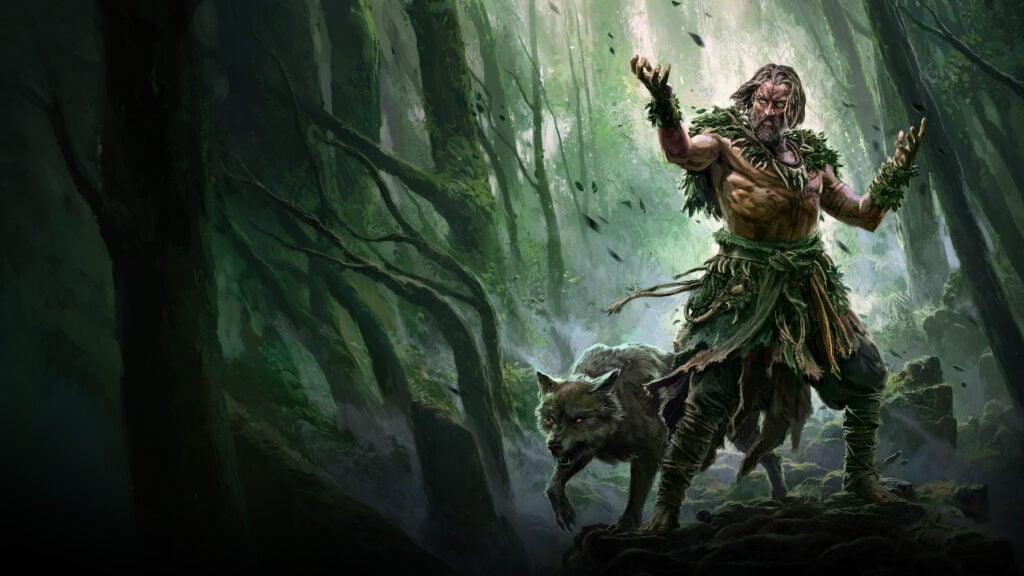
Human-form Druid leans on magical staves and nature magic like volcanoes, thunderstorms, vines, and plant-based skills, while also setting up long-duration effects that remain active when you shapeshift. You can drop a persistent volcano as a human, swap to an animal form and use melee slams that interact with this volcano for extra damage.
Form-swapping itself is built around a new item type: Animal Talismans. Equipping one lets you pick which animal the talisman represents, granting you the basic attack from that form as a skill. Using that skill instantly transforms you into the animal, casting a spell makes you human again. Rogers claims that the goal is for these changes to be “seamless and immediate,” as form change is something you’re doing constantly, rather than as a long cooldown-based choice.
Druid forms
Bear form
Bear is Druid at its slowest and most brutal. Its basic attack is Maul, and it’s all about generating Rage for heavier abilities like Furocious Slam and Rampage. Once the runes on the druid’s back light up, you know you’ve banked enough Rage to unleash more powerful versions of those attacks.
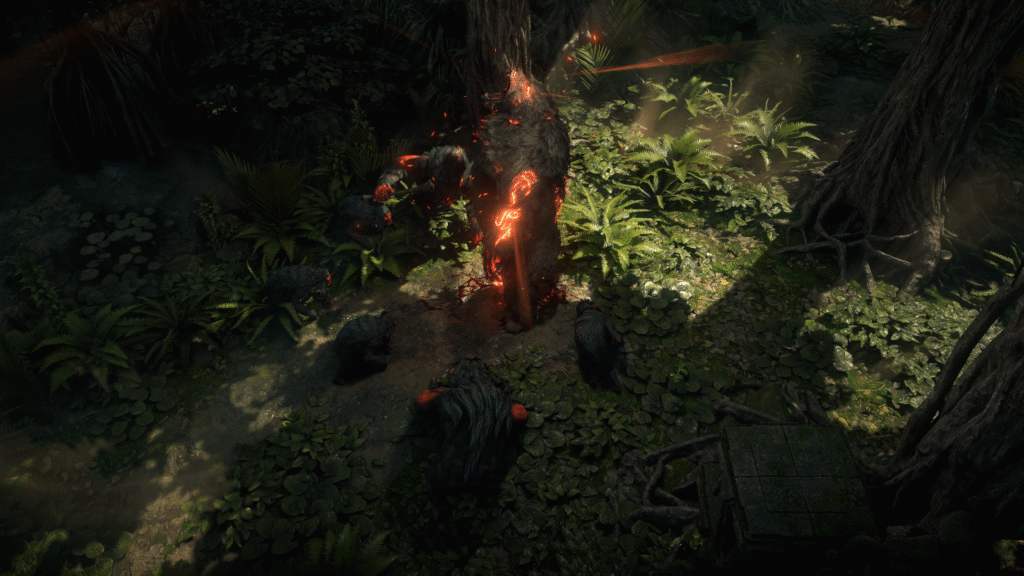
Bear form also synergizes well with the Druid’s human spells. For example, the aforementioned volcano spell spits out magma balls by default, but if you slam near it in Bear form, it will throw out extra projectiles. Abilities like Walking Calamity, Bear’s ultimate skill, push this fantasy even further, enveloping you in a storm of fire while generating more Rage.
On the utility side, Bear form can turn rage into Endurance Charges, allowing you to use a Warcry like Ferocious Roar. But here’s an interesting twist: it’s also a Meta Gem that allows you to socket warcries from other classes, and they work surprisingly well. Sometimes even too well. Using Ancestral Call turns you into the fire god Kaom, so you effectively become a Karui War God Bear.
Wolf form
In contrast with Bear’s slow but hard-hitting nature, Wolf form is built for speed and ice damage. Even its basic attack gives you a form of mobility: it’s a lunging strike that closes the gap quickly. After attacking, the Wolf will stand on its hind legs, but after running for a bit, it drops back to all fours to move faster between packs.
Wolf skills lean heavily into the Moon-themed cold identity. Lunar Assault freezes enemies in place, setting up a combo where repeated Rakes make the icy shards explode on the ground.
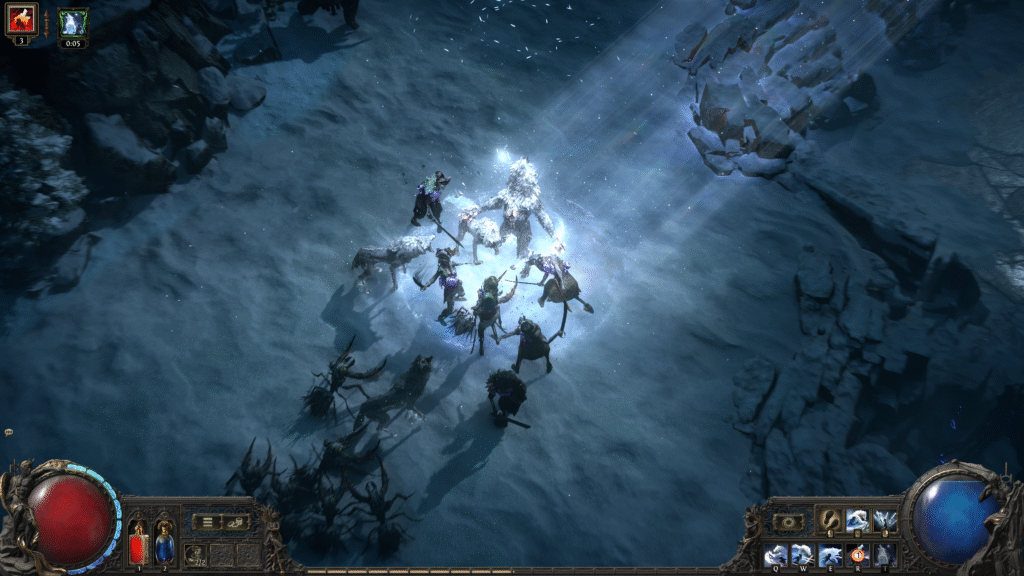
Wolf’s another skill, Pounce, marks an enemy, which summons a wolf minion after death. These wolves deal more damage based on the pack size, and prioritize the marked targets.
Boss battles usually counter the “kill to summon” mechanics, but Wolf form has a remedy for this in the Cross Slash ability. This attack has you hop backwards and slash in an X, detonating and proccing all the marks without needing to kill the enemy. Along with summoning your wolves, it also drags all the ice fragments you generated on top of the target. Much like Bear’s Roar, Pounce is also a Meta Gem that allows you to slot in Mark skills from other classes.
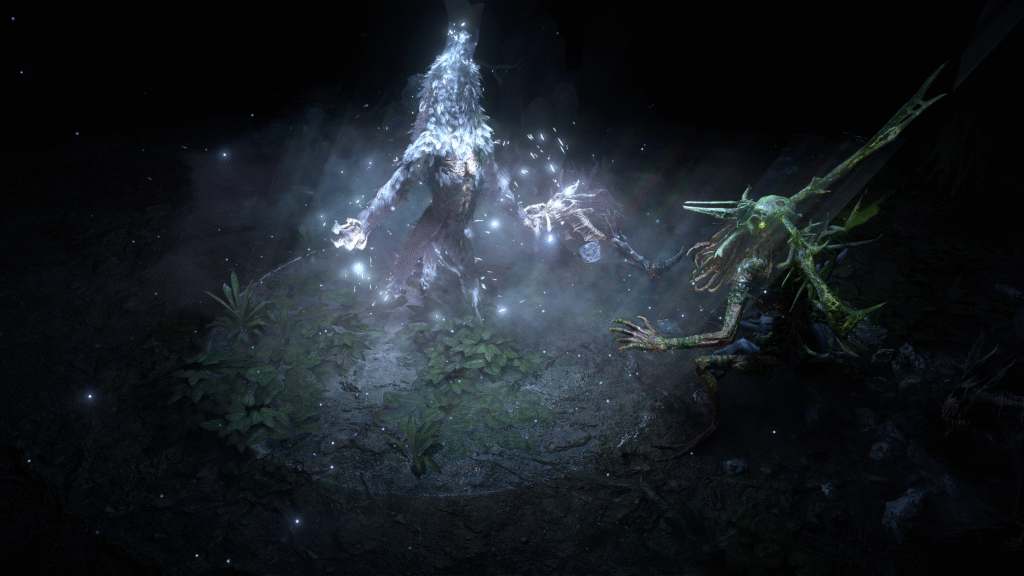
For those who love combining, there’s the Lunar Blessing ability that temporarily transforms you into an Arctic Werewolf that can consume Rage to keep the form going, encouraging the mixed Bear-Wolf builds.
Wyvern form
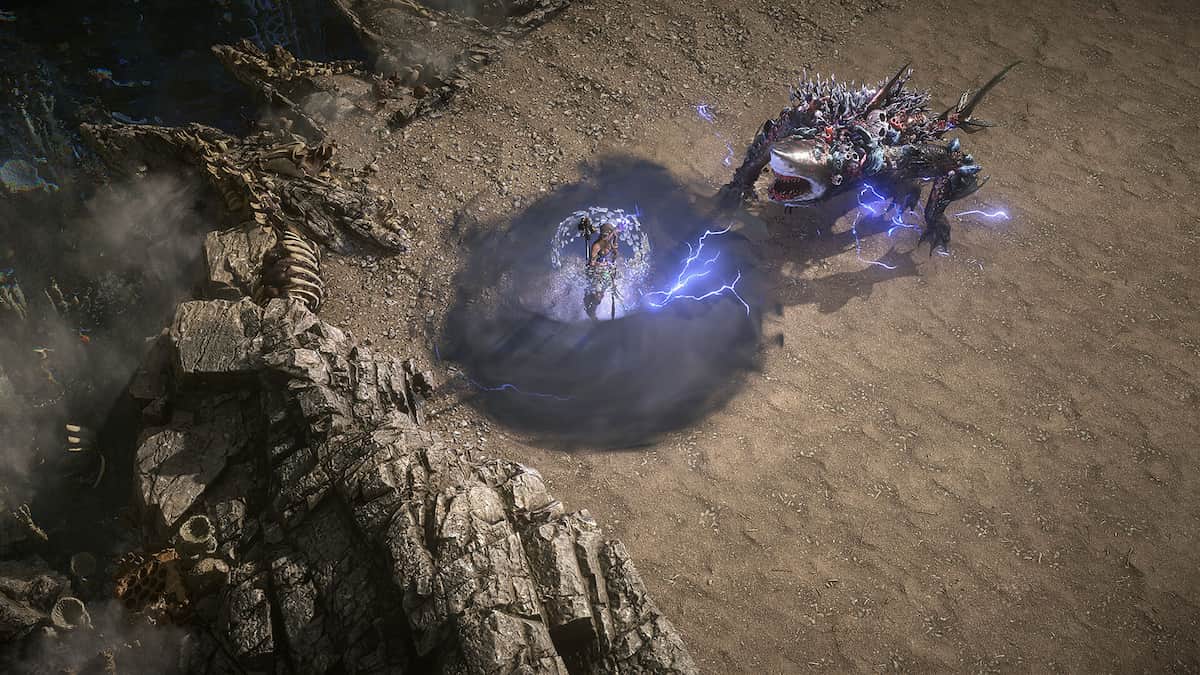
Wyvern form gives the Druid a more long-range oriented, fire-and-lightning dragon caster identity with some melee options. Its basic attack is Rend, a forward jump and a slash that can be followed up with a stun. But Wyvern really comes online when you start Devouring the corpses to generate Power Charges, which can be used to supercharge Rend with a lightning AOE.
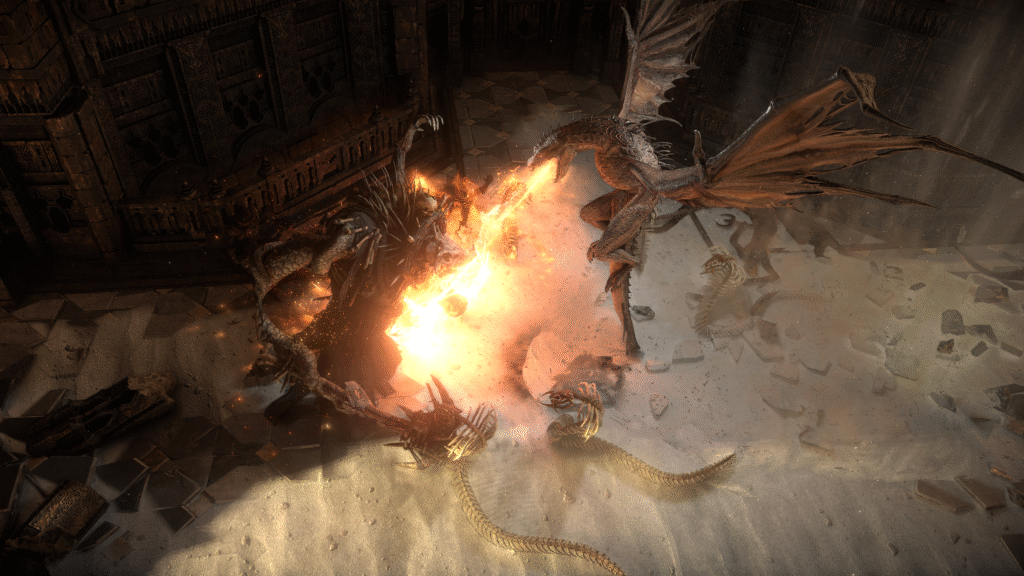
Wyvern embraces its dragon fantasy with multiple breath attacks. Rolling Magma spits bouncing fireballs that synergize well with the Volcano spell. You can also spit oil on your enemies to make them ignite faster. If you have enough charges, you can cast a barrage of lightning projectiles while you root yourself in place.
Druid’s nature magic helps Wyvern out further. Entangling Vines and Thunderstorm slow and soak enemies, making them easier to shock and freeze. Wet status buffs both Wyvern’s lightning and Wolf’s cold setups. Plants benefit from thunderstorms too, improving skills like Entangle and Thrashing Vines. Though the highlight spell for Wyvern form is Flame Breath, which lets you take flight and stream fire on your enemies from above.
Druid ascendancies
Druid launches with two Ascendancies, Shaman and Oracle, with the third planned for the future.
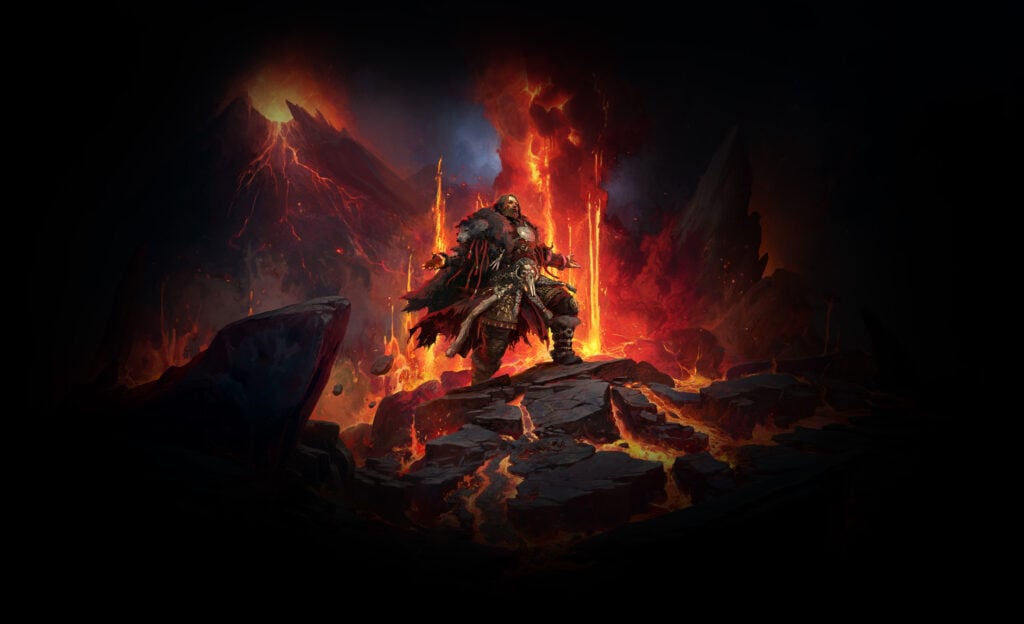
Shaman embodies the Rage-spellcaster idea. Nodes like Druidic Champion and Furious Wellspring let you scale spell damage with Rage and generate Rage passively. Shaman also taps into Azmerian Magi lore via Wisdom of the Magi, which unlocks new Shaman-only modifiers on Runes and Idols, expanding build customization. Another notable node, Bringer of the Apocalypse, lets you become a walking elemental storm once you’ve dealt enough elemental damage, raining down multi-element storms around you.
Oracle is more about foresight, prediction, and alternate timelines. Fateful Vision occasionally shows a vision of your future self using a specific skill, and if you follow that “prophecy” and use that skill, you get a big damage boost. Converging Paths grants Moment of Vulnerability, a mechanic that lets you exploit brief windows when enemies are especially susceptible to Freeze, Stun, or Electrocution by effectively merging a future state with the present to deal damage in both timelines.
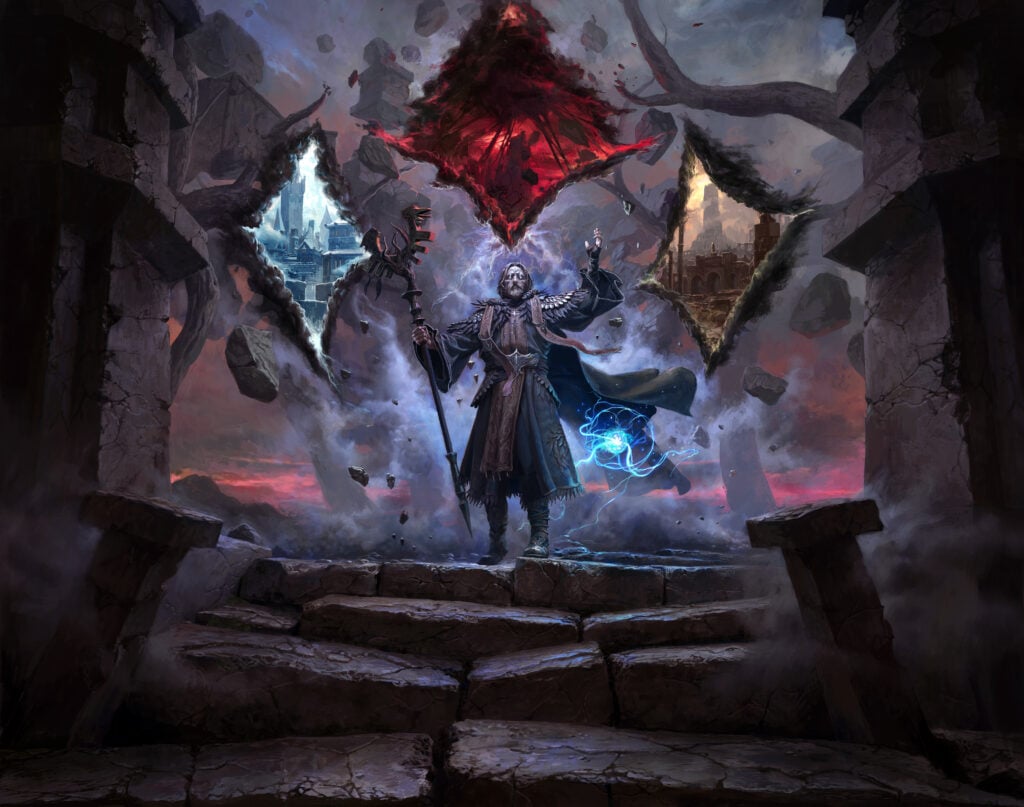
The most notable part of Oracle is The Unseen Path. It adds 130 new passive nodes to appear in the Druid’s section of the passive tree. These nodes are supposed to represent the knowledge from alternate futures. Both Ascendancies, in general, lean into giving Druid access to things no other class can get.
Spell Totems and new support gems
This update also brings a big new build enabler: Spell Totems as a Meta Gem. Spell Totem lets you socket any spell and have a totem cast it automatically for a short time, at the cost of three Endurance or three Power Charges. Druids get Endurance Charges in their Bear form and Power Charges in the Wyvern one, so they work well on them, but other classes can also utilize them.
Along with Spell Totems, the newest patch adds more than 30 new support gems. A few examples GGG provided us with:
- Fan the Flames: spreads fire from ignited enemies hit by Wind skills to targets behind them.
- Accelerated Growth: creates extra explosive plants after you grow plants with rain.
- Advancing Storm: makes Storm skills like Thunderstorm or Tornado move across the battlefield and absorb ground effects.
- Echoing Cry: causes warcries to repeat several times after use, giving extra empowered attacks.
- Grounding Shocks: turns shocked enemies into living tesla coils that arc lightning to nearby targets.
These are clearly designed to make cross-class synergies better and even more viable than they are right now.
Fate of the Vaal league
The 0.4.0 update also introduces Fate of the Vaal, a new league centered around the ancient Vaal civilization and the queen Atziri. While exploring, you will find Vaal remnants, arcane devices that alter nearby monsters. Killing them partially empowers the device, and you need to activate six linked remnants to gain access to a lost underground temple that belonged to Atziri herself in the past.
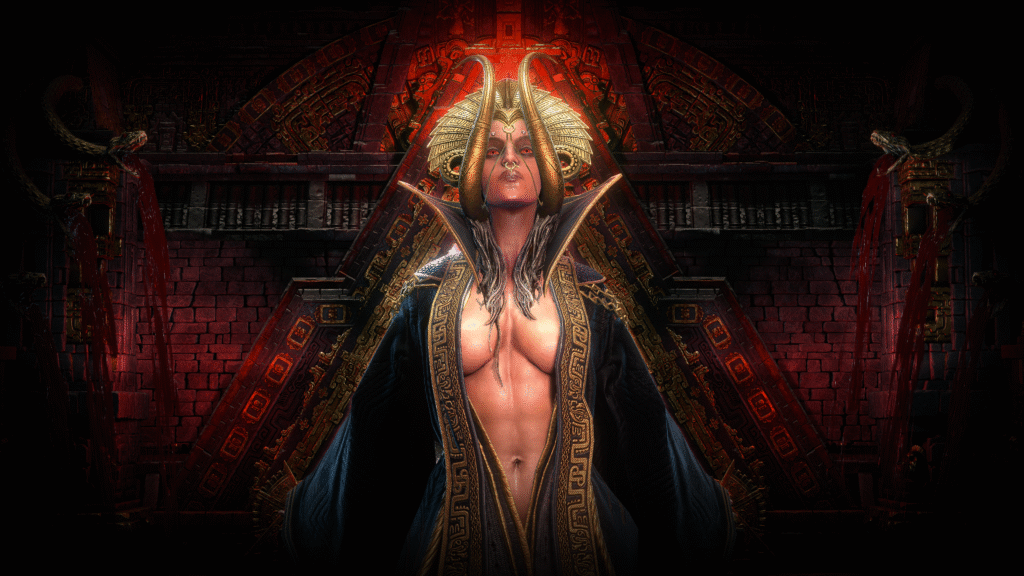
The inside of the temple is where the fun begins. The initial layout is scattered and makes no sense, and it’s up to you to use the sacrificial energy you’ve been collecting to place and rearrange rooms, effectively letting you design your own dungeon. Rogers stated that this idea initially came from him liking a game called Loop Hero, which also had you place your own hurdles.
Each run will have you place six rooms, creating paths, placing loot-heavy chambers, or positioning synergetic rooms next to each other. Every room has its own encounter, reward, and level-up conditions. A Commander placed next to a Garrison will level up those troops, making them tougher but more rewarding. UI for this is made with usability in mind, showing you which placement gives you what without you needing to memorize it all.
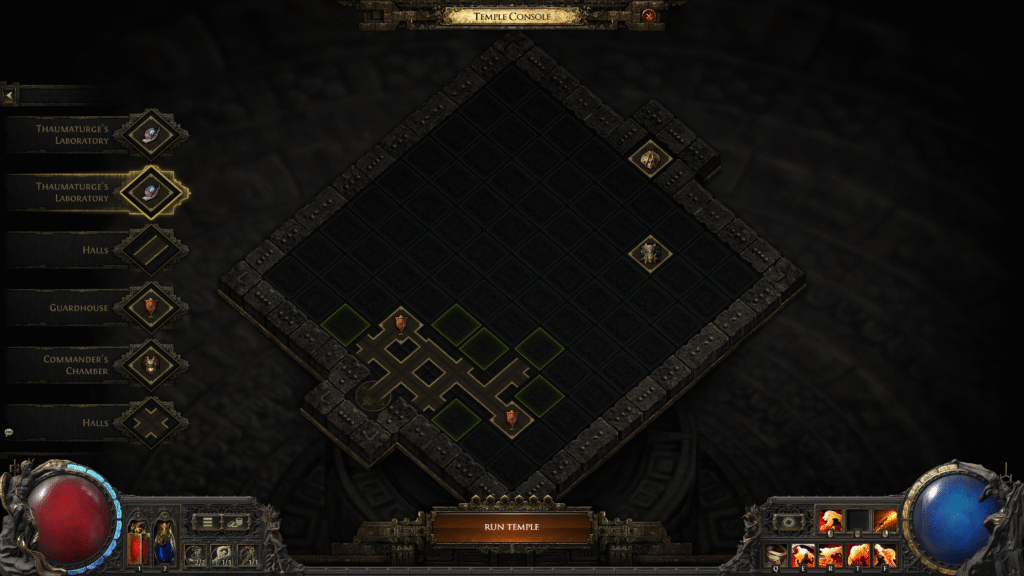
The main goal of the temple is to use a prototype time device at the temple’s entrance to travel back to right before Atziri triggers the cataclysm that destroyed the Vaal. Eventually, you’ll be able to place the Royal Access Chamber, granting a path to Atziri herself in a mid-cataclysm boss fight. One of the showcased rewards is Atziri’s Rule, a staff that boosts levels on corrupted gems, trades life for extra damage, and creates refraction mirrors that split projectiles into novas and chain across the arena.
Other changes
The previous league, Rise of the Abyssal, is being folded into the core game as a randomly appearing mechanic in endgame areas. To support that, GGG is adding an Abyss Atlas tree, with points earned by completing Abysses, delving into Abyssal Depths, and killing associated bosses.
Abyss crafting is being removed from Waystones, and so is Instilling. The team says these systems felt mandatory but fiddly and visually noisy. Instead, much of that power is being moved to Tablets, which last ten maps and don’t need constant micromanagement.
The update will also make another pass at monster density and visual clutter. In 0.3.1, GGG reduced monster counts in the early endgame but scaled them back up by Tier 15. It still felt overwhelming for many, so now the monsters will scale in durability instead of raw numbers.
Rogers lamented that not all planned endgame content made it into 0.4.0, and larger endgame expansion and significant Atlas passive overhaul are planned for 0.5.0. Still, there are lots of changes to sink your teeth into:
- 11 new uniques, plus buffs to dozens of underused ones.
- 21 rebalanced and 9 new Lineage supports.
- Nearly all existing Ascendancies adjusted, with some major reworks like Smith of Kitava.
- More than 20 new Druid skills, plus balance changes to 90 other active skills across all classes.
- Over 250 new passive skills have been added to the tree.
All these changes make The Last of the Druids a patch for everyone, not only those who wanted to play as a magical man-bear-werewolf. It lays the groundwork for the endgame, introduces the shiny new Vaal league, and bundles all of this with some performance upgrades that will make Pillars of Eternity 2 run at least 20% better.
Pillars of Eternity 2: The Last of the Druids will become available on December 12th at 11am PST. In addition to this, GGG is holding a free weekend for everyone who wants to try the new class out.


Published: Dec 4, 2025 02:30 pm